


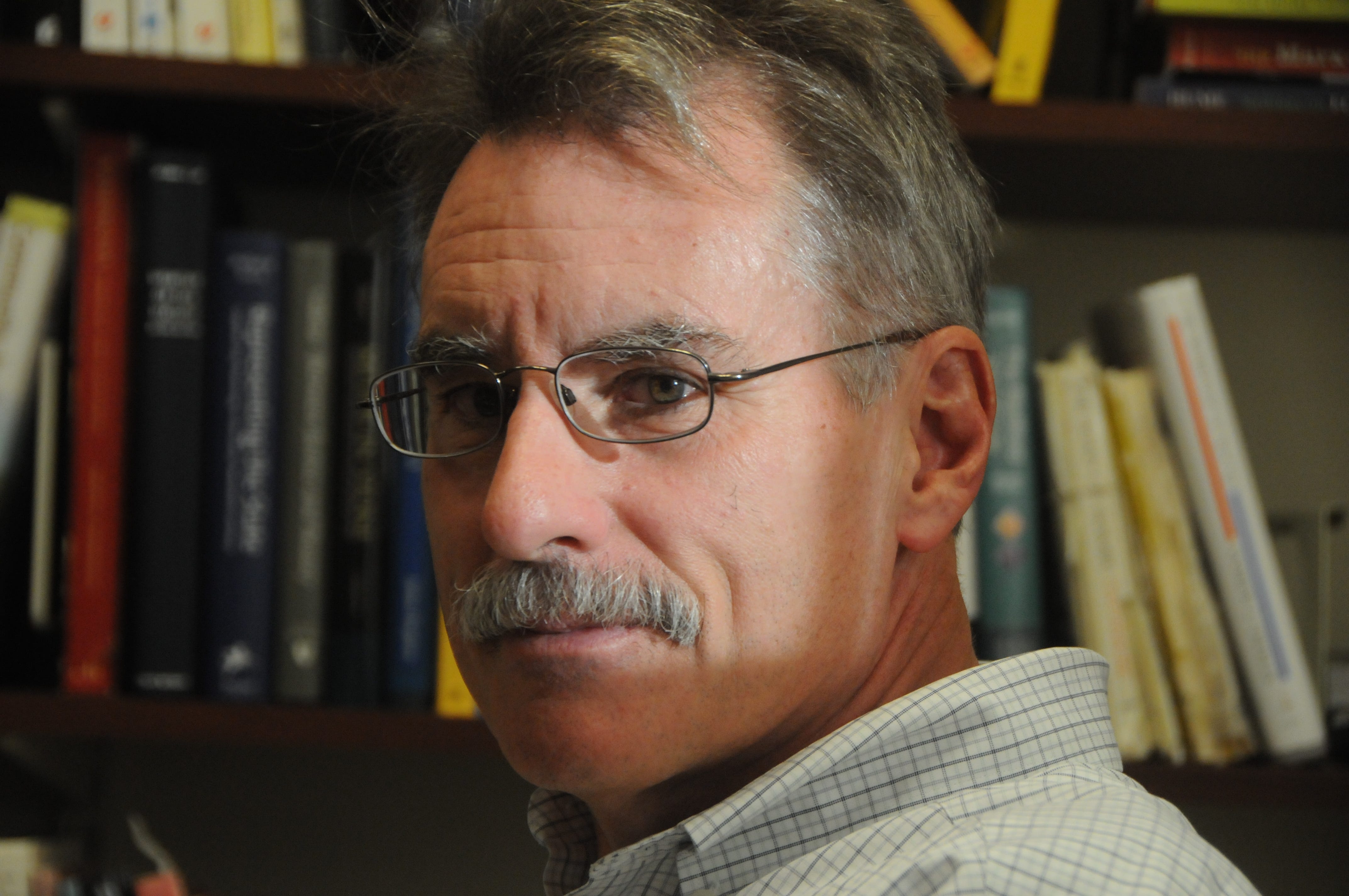
When we imagine professors, we often picture them only inside the classroom: leading discussion, assigning readings, writing on the board. But professors were once students too, sitting where we sit now, uncertain about what comes next.
That was part of the reason I wanted to interview Dr. Brian J. Shaw, the Richardson Professor of Political Science, who has taught at Davidson since 1982. Over more than four decades, he has taught in the first-year writing program, the humanities program, and the political science department.
In conversation, Shaw did not describe his life as a carefully planned path. Instead, he returned again and again to a phrase that surprised me: many of the most important turns, he said, were simply “a great accident.”
At the center of those accidents was one word he chose to describe himself: curious.
Background
Shaw grew up in Providence, Rhode Island.
“I grew up right in the city,” he said. “The first eighteen years of my life were spent there.”
He is a first-generation college student from what he described as a “working-class, lower middle-class” family. His father grew up in Brooklyn, and his mother was from Rhode Island. He attended Providence public schools and, like many students in his neighborhood, had little sense that college was a natural next step.
“I had no great aspirations for college,” he said. “I grew up in a neighborhood where no one went to college. I didn’t know anyone who went to college.”
Becoming a Professor (Without Planning To)
One striking feature of Shaw’s story is how candid he is about uncertainty early in his life.
“I was not a particularly good high school student,” he said, “putting it mildly.”
He attended a demanding public high school where most students continued to college, and that expectation mattered. Shaw enrolled at the University of Rhode Island.
College, however, slowly changed his outlook.
“I realized that my parents had actually sacrificed a good bit to make this available to me,” he said. “And I realized I didn’t have to be there. It was costing my family money. So if I were there, I should pay attention.”
When he began paying attention, something else happened: he became interested.
Shaw later transferred to the State University of New York at Stony Brook, where he majored in psychology with an emphasis in neuroscience. While there, he wandered into political philosophy almost by chance.
“I just happened to take a couple of courses in political philosophy,” he said. “One of which was not a happy experience, and one of which was.”
Even after graduating, Shaw still did not know what he wanted to do next. Then came the turning point: France.
France: “It Opened My Eyes”
Shaw went to France, as he describes it, “out of the blue.”
“I didn’t speak a word of French,” he said. “I didn’t know anything about France.”
At the time he had already applied to and been accepted by several law schools. But the opportunity to go to Europe felt too rare to ignore.
“I’d never been really farther than New York,” he said. “So the chance to go to Europe was very exciting.”
The year abroad proved transformative.
“It really turned my life around,” he said. “Because it was a chance to see things from completely different perspectives.”
That experience eventually led him to graduate school at the University of North Carolina at Chapel Hill. Initially, he expected to stay only a year or two.
Then another accident occurred.
“I discovered that I really, really, really liked graduate school,” he said. “I really liked studying political philosophy.”
He stayed for six years. Not long after, he accepted a position in North Carolina, at Davidson College, where he has taught ever since.
A Classroom Built on Strong Arguments
Throughout the interview, Shaw returned to a central idea about teaching: students deserve the strongest possible version of every argument they encounter.
We discussed his course Foundations of Liberalism, which was awarded the “Spirit of Inquiry” award by the John W. Pope Center for Education Policy. The class explores major liberal thinkers who disagree profoundly about what liberalism should mean.
The course culminates with two figures who represent very different interpretations of liberalism: John Rawls and Robert Nozick.
What matters to Shaw is not pushing students toward a preferred answer.
“What education ought to be about,” he said, “is exposing students to contrasting perspectives and asking them to make their way through it.”
He compared his approach to that of a lawyer.
“When we’re doing Marx, I try to make the strongest case I can for Marx. When we’re doing Lenin, I try to make the strongest case for Lenin,” he said. “I’m almost like a lawyer. Depends on who’s paying me that week.”
And when students ask what he personally believes?
“My opinion doesn’t matter,” he said. “They should just deal with the authors that we’re reading.”
The Word He Chose: “Curious”
When I asked Shaw for a single word that describes him, he paused before answering.
“Curious,” he said.
The explanation led to one of the most personal moments of the conversation.
His father, he explained, was “entirely self-educated.” He worked during the day and read and wrote at night. Shaw remembers weekends spent visiting the library and Sunday mornings going to the train station to buy newspapers: The New York Times, The Boston Globe, and the Providence Journal.
“We just read a lot,” he said.
Shaw added that he never felt he possessed quite the same level of discipline as his father. But he did inherit the curiosity.
Eventually, that curiosity shaped the life he chose.
“So I began to think that perhaps it might be nice if I could find a job that would allow me to read for a living.”
He has been doing exactly that at Davidson since 1982.
Outside the Classroom
Like many professors, Shaw’s life extends well beyond the classroom.
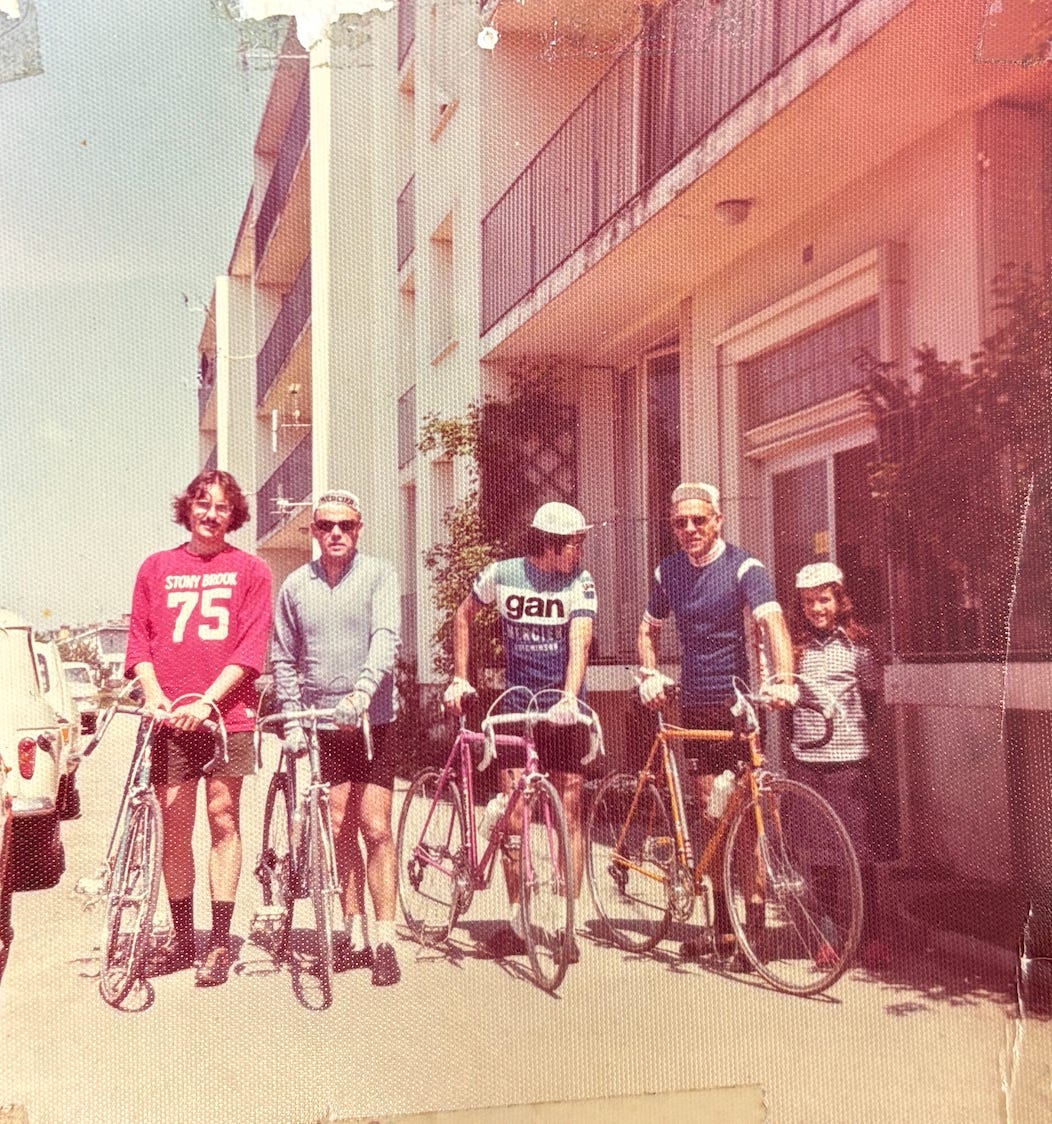
For many years his main hobby was cycling.
“I would guess I’ve biked probably a good quarter of a million miles,” he said.
He rode throughout the British Isles and France and often logged “hundreds and hundreds of miles a week” with local cycling clubs. His wife once joked that she had not realized he held two jobs: teaching and cycling.
Eventually he stopped due to back problems, including a fractured spine from high school football and later surgeries.
Music remains a major passion.
“Classical music,” he said, “though not exclusively. I also like blues and jazz.”
One particular interest stands out: French Baroque opera.
Over the years Shaw has built a large record collection, numbering in the thousands. He maintains multiple turntables and takes careful care of the LPs. When he and his wife purchased their first home, they even reinforced part of the basement to support the weight of the records.
“It is a collection,” he said.
Why Davidson Matters
When asked what he appreciates most about Davidson, Shaw pointed first to the academic environment itself.
“The kinds of things that I do are not really the kinds of things I could do at many schools,” he said.
Small classes and strong students allow him to teach in the way he believes works best: slow reading, sustained discussion, and engagement with demanding ideas.
“You have to have small classes, and you have to have very good students,” he said. “And Davidson students are very good.”
He also spoke warmly about his colleagues and about the institution’s evolution over the decades. When he first arrived in 1982, Davidson felt like a “small, fairly rural school.” Today it sits within the orbit of a rapidly growing Charlotte region.
“I’ve been extremely fortunate to be here,” he said.
His Advice to Students
When asked what advice he would give Davidson students, Shaw did not offer a formula for success.
Instead, he offered something simpler and harder: take your interests seriously.
“It sounds corny to say,” he said, “but it’s essentially true. Students should follow their interests, whatever they are.”
He also described Davidson in a way that caught my attention.
“Davidson is a luxury product,” he said.
Not because it is flashy, but because it provides something increasingly rare: time and space to think.
“Not everyone has the opportunity to spend four years living in a very nice place, having small classes in a small community, reading and thinking about whatever they’d like to do.”
Students should make the most of that opportunity.
“The main reason that you’re here,” he said, “is to read and to think about these things.”
For many people, he added, it may be the last time they have the chance to do so.