


September 19, 2026 marked one year since Senate Democrats demanded that any bill to fund the government include an extension of enhanced Affordable Care Act (ACA) subsidies. Republicans refused to compromise, triggering the longest full government shutdown in American history. The shutdown finally ended on November 12 after eight Senate Democrats broke ranks in exchange for a non-binding promise of a future vote on ACA tax credit extensions. While political commentators — who frequently treat bipartisanship as the ultimate aspiration of American governance — hailed these senators for breaking the gridlock, recent history demonstrates that Republicans routinely leverage the Democratic Party’s desire for unity to undermine their agenda.
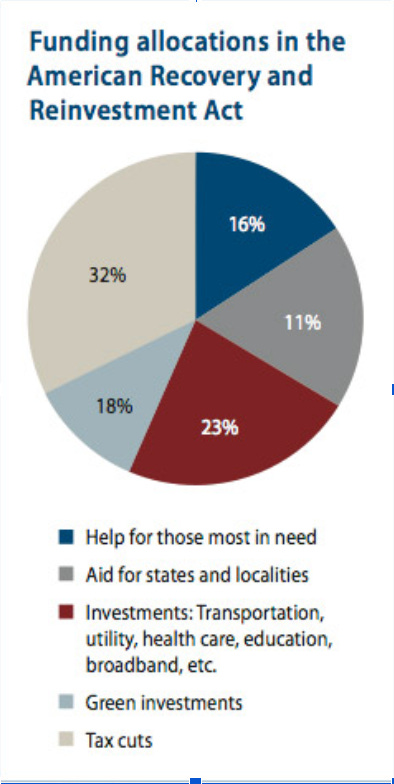
Entering office in 2009 with a mandate for change, President Barack Obama sought to usher in a “post-partisan” era. Rather than take advantage of the filibuster-proof Democratic majorities in Congress to pass the estimated $1.2 trillion in stimulus needed to fill the output gap left by the Great Recession, Obama preemptively limited the American Recovery and Reinvestment Act (ARRA) to under $800 billion and filled over one-third of it with tax cuts specifically designed to attract Republican support. These concessions yielded zero House Republican votes and just three in the Senate.
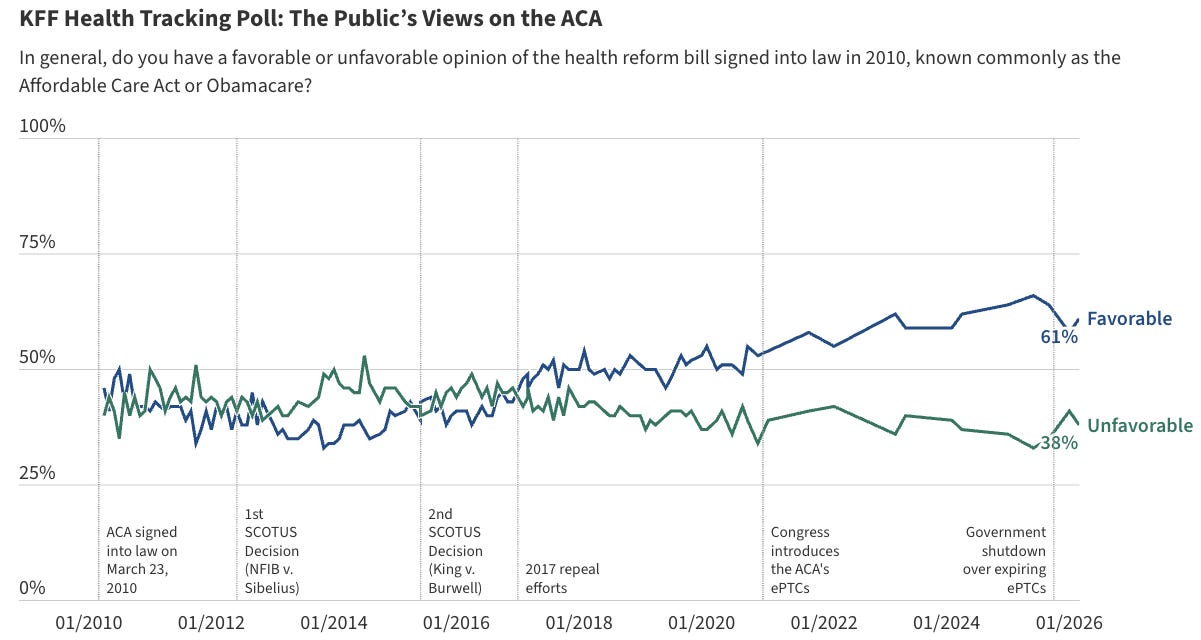
As for his signature policy of healthcare reform, Obama sought to win over Republican votes by structuring the ACA around an individual mandate and private insurance exchanges. This market-based model was originally designed by the Heritage Foundation, the conservative think tank responsible for Project 2025 (though Heritage has since opposed the ACA, the intellectual lineage from its 1989 proposal to Romneycare to the ACA is well-documented). Democrats spent months negotiating details, only for the bill to pass without a single Republican vote in either chamber.
Proponents of compromise argue that bipartisan policies are more popular and less likely to be repealed. In practice, the opposite is true. The ARRA’s scaled-down stimulus proved insufficient to produce a rapid recovery. By 2010, 56% of the public opposed the stimulus and 63% thought the projects in the plan were for “purely political reasons” according to CNN polls. Meanwhile, Republican leaders and conservative media commentators ignored the ACA’s private-market origins and branded the bill as “socialism” and “government takeover of healthcare,” which PolitiFact named their 2010 “lie of the year.” This rhetoric fueled the Tea Party movement, allowing Republicans to gain 63 House seats in the 2010 midterms after which they would vote over 54 times to repeal or defund the law over the next four years.
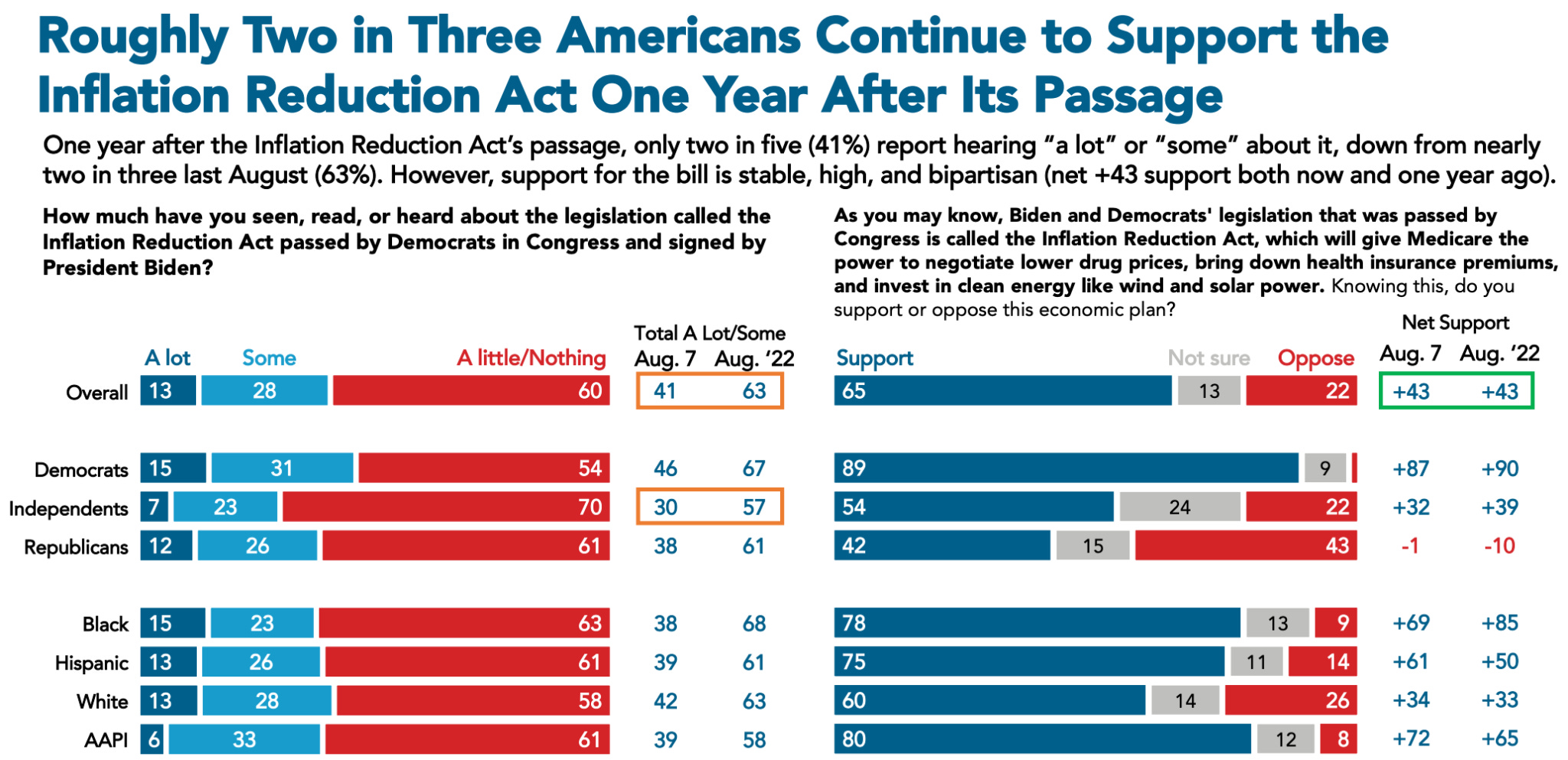
In contrast, President Joe Biden entered office in 2021 with a razor-thin 50-50 Democratic majority in the Senate (with Vice President Kamala Harris breaking ties) and faced the possibility of a double-dip recession in the absence of a stimulus package. Instead of accepting the $618 billion counteroffer from moderate Republicans, Biden pushed through a $1.9 trillion package using the budget reconciliation process to bypass the Senate filibuster. The American Rescue Plan Act intentionally erred on the side of overshooting to avoid a sluggish recovery akin to 2009, and in doing so, created 4 million jobs, reduced unemployment 2 percentage points, and slashed child poverty nearly in half. Despite receiving no Republican votes, 70% of the public favored the legislation in 2021 according to the Pew Research Center. In 2022, Democrats used the same approach to pass the Inflation Reduction Act, which was the largest federal investment in climate change and clean energy in U.S. history and is projected to reduce economy-wide greenhouse gas emissions by 35-43% below 2005 levels by 2030.
However, since budget reconciliation is practically limited to one major package per year, Democrats could not rely on strict party-line votes for other priorities. Instead, the Biden administration successfully negotiated with moderate Republicans for their votes on the long-awaited Infrastructure Investment and Jobs Act (IIJA) and the Bipartisan Safer Communities Act (SCA), which was the first major gun safety legislation in nearly 30 years. The IIJA spent $1.2 trillion to repair aging infrastructure and expand high-speed broadband to rural communities, while the SCA enhanced background checks for buyers under 21, closed the “boyfriend loophole” for domestic abusers, and funded state red flag laws, contributing to the post-2022 decline in violent crime. In both cases, bipartisanship was treated as a strategic means to an end, not a virtue in and of itself.
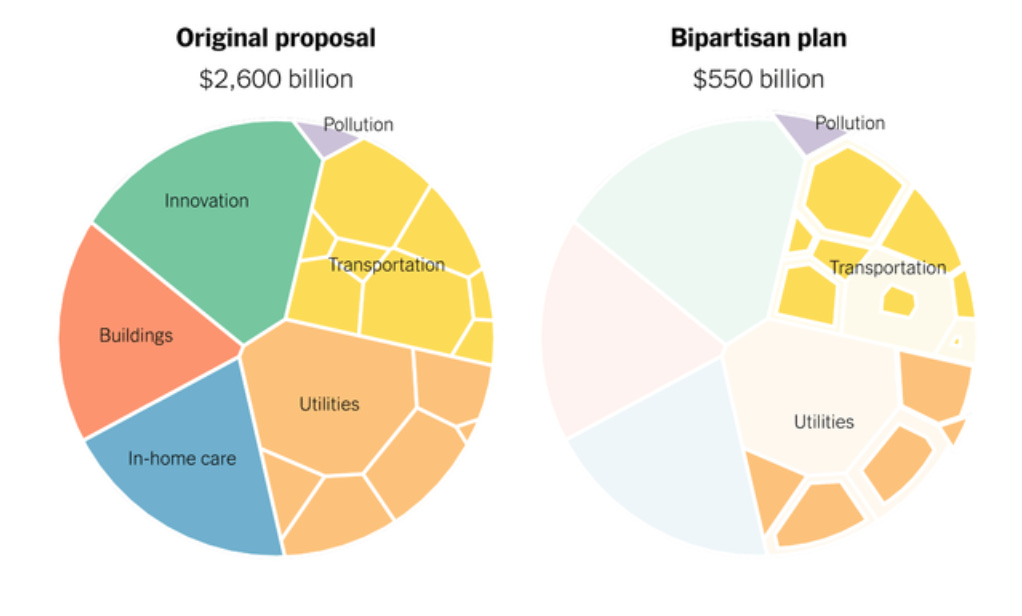
Biden succeeded where Obama faltered by seeking cross-aisle consensus only when Republicans were genuinely willing to negotiate, and proceeding with partisan votes when it was necessary to deliver results. As Democrats prepare for the midterms, the lesson of the last two decades is clear: voters reward tangible improvements to their lives, not procedural civility.
Compromise is only as valuable as the policy it produces.