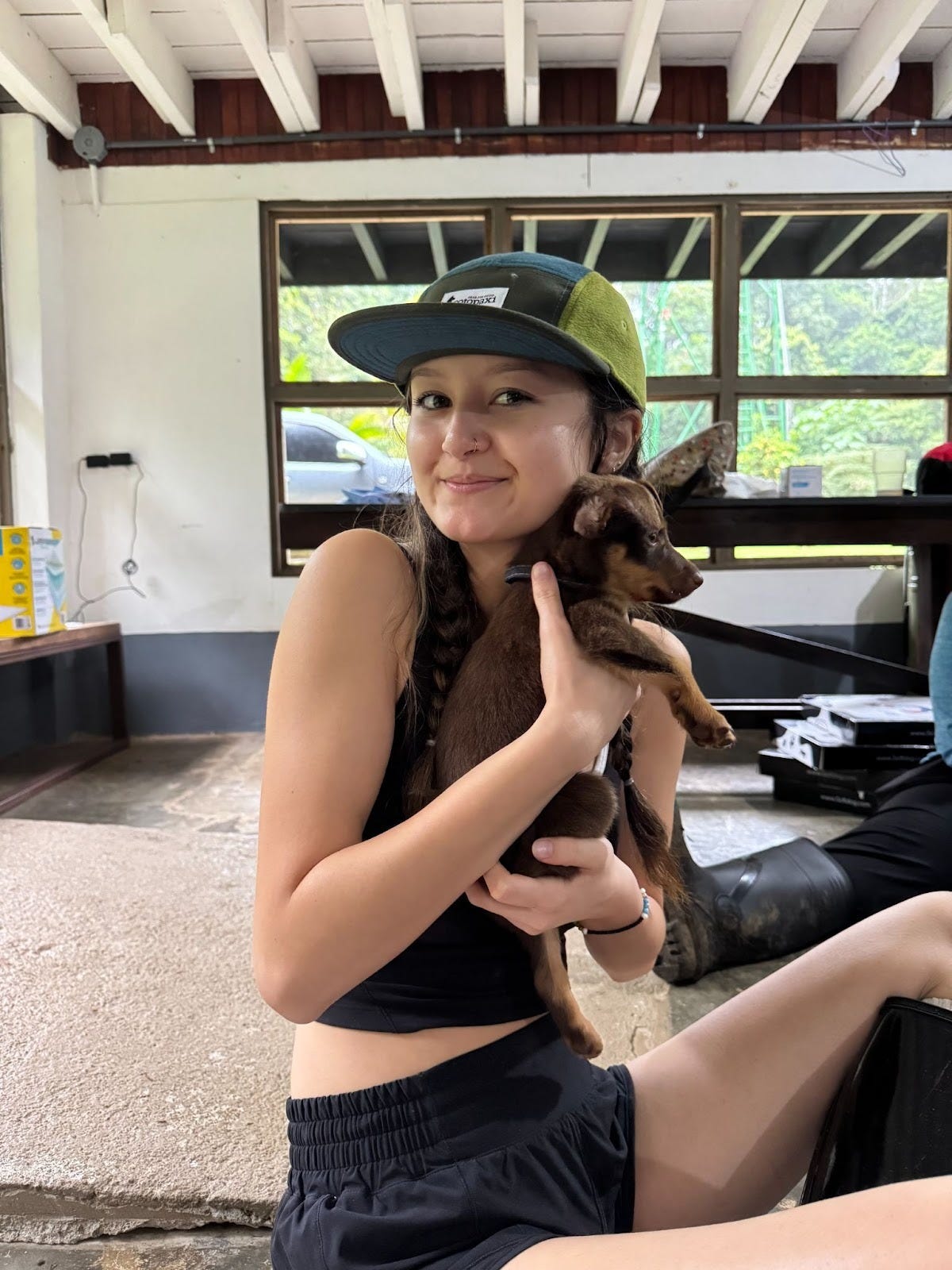

Believe it or not, this student has only been out of the country twice. Both to the same country and with the same purpose: Costa Rica and veterinary medicine.
This past winter break I dedicated my break to my education and career, and where else is better than Central America? Costa Rica, specifically, has a very large stray dog population. Riding on the bus, I found my heart yearning for the malnourished dogs scrambling for scraps along the roads. But where I felt discomfort, the locals were unbothered. These stray dogs were common, much less an immediate issue. Still, years after my first trip, I remember the ache in my stomach.
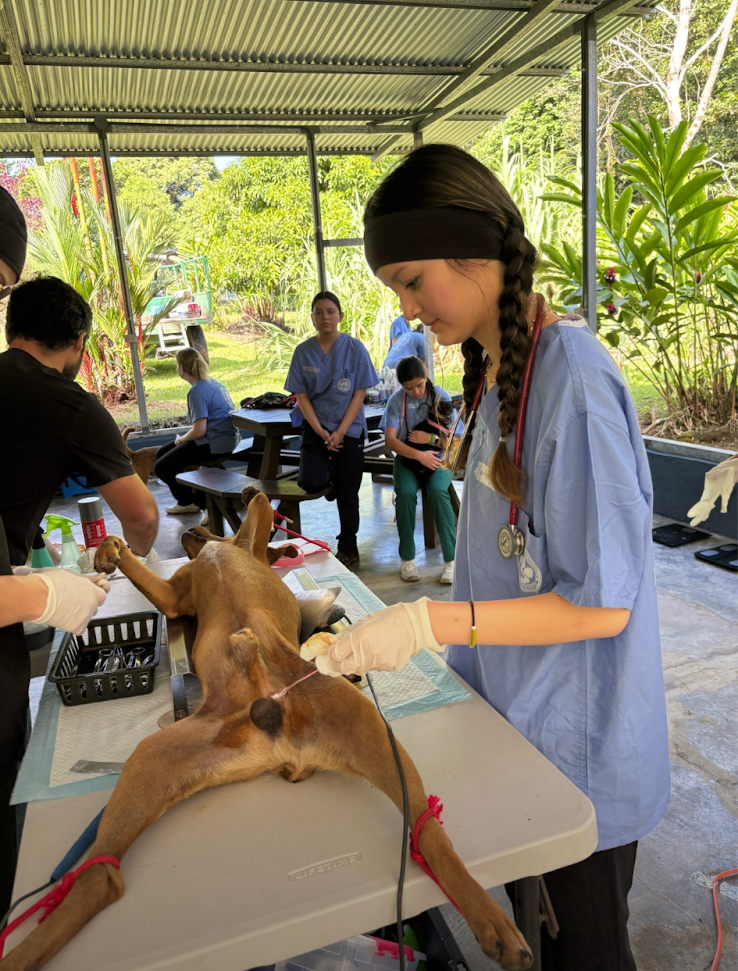
On my second trip back to Costa Rica, I spent four days at the vet clinic engrossed in the rainforest of La Suerte. Three days were dedicated to neuter and spray surgeries with one day up in wellness. Unlike my first experience, the veterinarian allowed the students to take on a patient of our own and individually guide them through the surgical process in its entirety. From gathering medication to prepping for surgery to recovery.
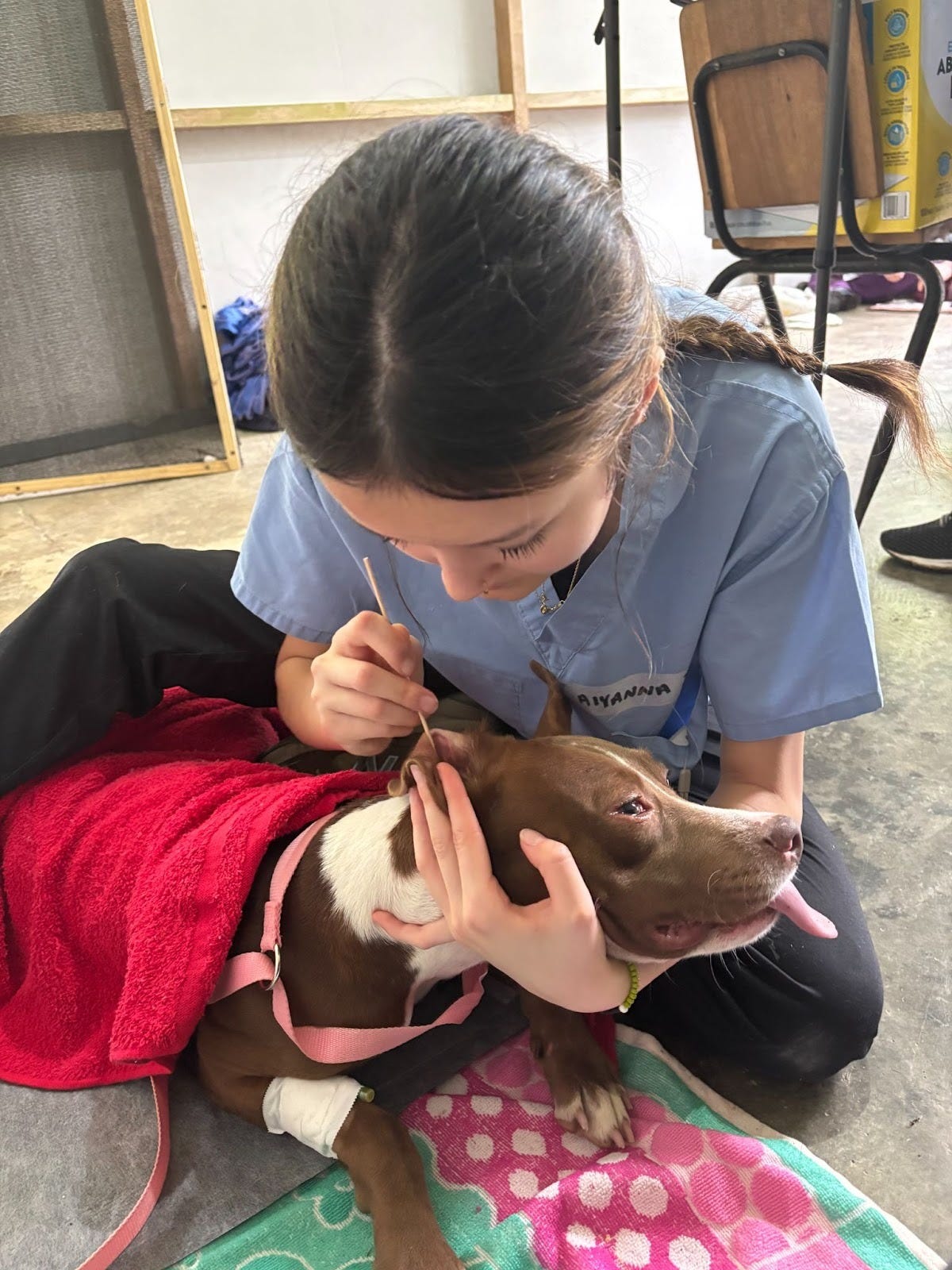
My last patient on the trip was a “feral” cat. It was better to deem them feral than to believe one can predict a cat’s behavior. The procedure was to measure their weight before collecting the medication, the dosage is based on weight. Before placing a catheter in for surgery, a catheter allows easy access into the bloodstream for medication if complications arise, we gave them ketamine Then, it was my responsibility as the cat’s assistant to restrain her. As the cat went down, I administered subcutaneous and intramuscular injections, shaved and sterilized the surgical field with alcohol and iodine soaked gauze squares, and guided the patient through the recovery process until they were fit to be released. Recovery is one of the most important stages of the surgical process. It’s often where the patient’s body temperature drops, so students were stationed by their patient’s side to measure heart rate, respiratory rate, and temperature every five minutes. Once the patient was stable, they were ready to go back home.
The three surgical days consisted of this repeated cycle. Patients were loaded on the dock and chugged in only to be splurted out the next minute. The speediness of the entire process left me wondering what was being overlooked. There’s a reason why spays in professional settings take more than three minutes. Caution was forgotten.
It should be said that I am thankful to the MRC organization for having developed my skills as a pre-vet student, skills that were established back in high school that one Costa Rican summer. However, it’s from this experience that I have learned what vet med should not be.
For background, MRC has been offering free veterinary care for years. And for years, owners bring their cats or dogs or strays they were able to grab and seek service, whether that be a check-up or surgery. And with each medication that was given, sutures that were used, cones wrapped around necks, they were all free of cost. MRC has managed to treat all patients that turn to their help without seeing a single colón. But, I ask, at what risk?
Smaller doses of ketamine were given to the patients. This caused patients to wake up in the middle of surgery, have abnormally high heart rates during recovery, experience more pain than a GP back in the United States would allow. Oftentimes more anesthetic would be given as whimpers were heard from the dog, but it was also common for the vet to rush through the procedure to limit the small amount of ketamine that was available. Unfortunately, more than one of my patients fell victim to this issue.
Of course, it has to be understood that our free-cost clinic could not be as precautious as those in the US are. We didn’t have the money or the resources. We were limited to what we had, and what we did have wasn’t much. So, to a degree, I understand the risks the veterinarian and others took during the surgical process. But it still leaves me wondering. Would it have been better to have given more ketamine, done more sutures for resources to deplete faster for us to help fewer patients? I’m not sure.