


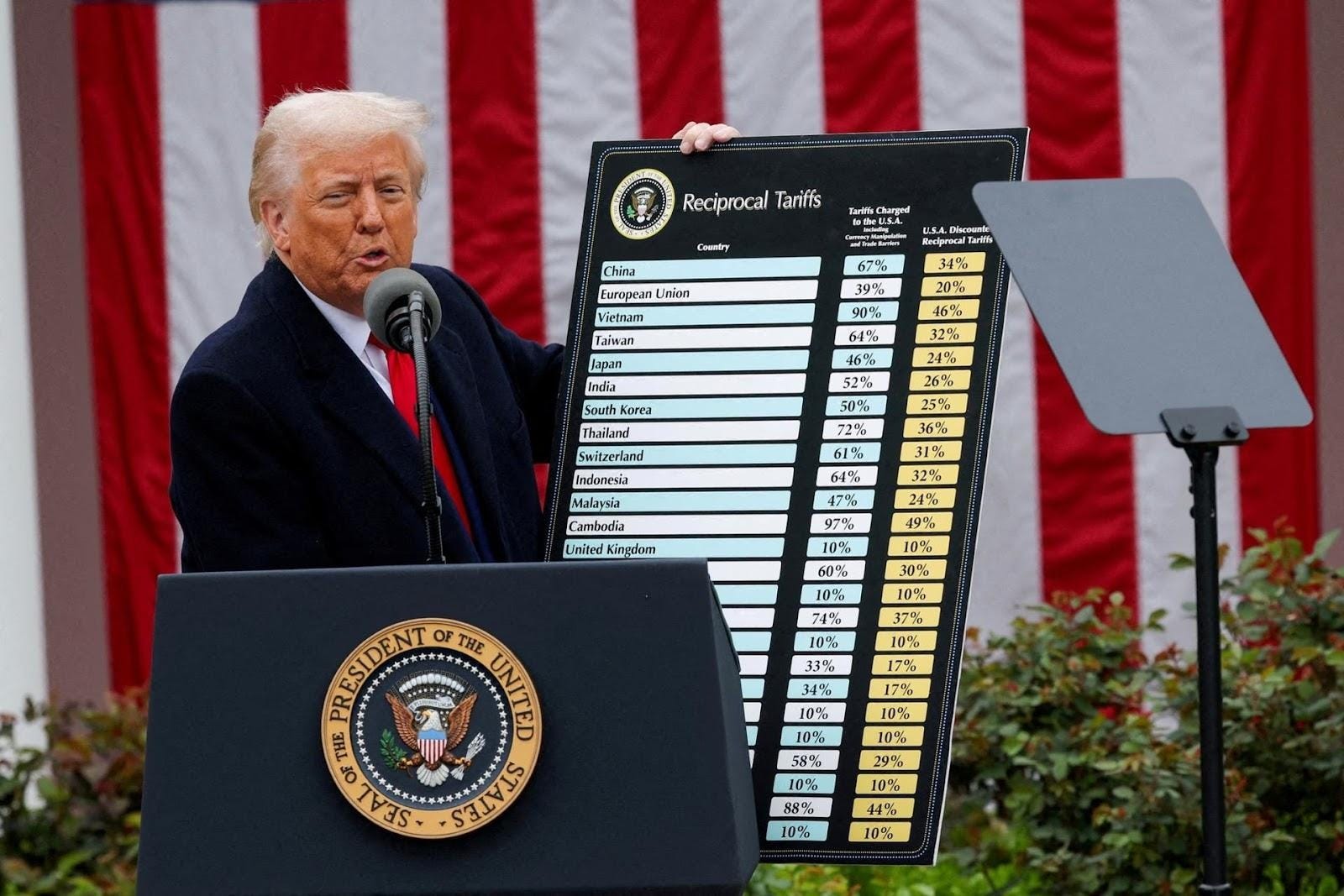
On February 20, the Supreme Court ruled in a 6-3 decision that the International Emergency Economic Powers Act (IEEPA) does not authorize the President to impose tariffs. This ruling invalidates both the “fentanyl” tariffs on Canada, Mexico, and China, and the sweeping “reciprocal” tariffs enacted on “Liberation Day,” April 2, 2025.
The majority opinion, written by Chief Justice John Roberts, argued that revenue-raising tariffs are a form of taxation that requires congressional authorization, while Justices Clarence Thomas, Samuel Alito, and Brett Kavanaugh dissented on the basis that the IEEPA grants the President authority to “regulate” importation, establishing his ability to unilaterally introduce tariffs. However, this ruling does not affect Section 301 tariffs on goods from China or Section 232 tariffs on steel (50%), aluminum (50%), and automobiles (25%).
Despite President Trump’s repeated insistence that tariffs are “paid for by foreign countries,” a tariff is a tax levied by a government on imported goods. The domestic company that pays the tariff is confronted with three options: sacrifice profit margins, raise prices, or cut costs through layoffs and forgone investment. A February 2026 report from the New York Fed found that 90% of the 2025 tariffs’ economic burden fell on American consumers and businesses. According to the Budget Lab at Yale, consumers pay 31–63% of the cost of tariffs on core goods like clothing and household supplies and 46–96% of tariffs on durable goods such as appliances and electronics.
Since everyone spends a similar amount on necessities regardless of earnings, tariffs function as a regressive sales tax that disproportionately hurts low-income households. The Tax Foundation, a center-right think tank, estimates that tariffs caused an average household tax increase of $1000 in 2025. This is an amount that 53% of Americans say they lack the sufficient liquidity to cover in Bankrate’s most recent Emergency Savings Report, and runs contrary to the President’s campaign promise of “making America affordable again.” Despite this, the ruling unlocks up to $175 billion in tariff revenue for refunds to affected firms, which does nothing to remedy the impact on consumers and produces little incentive for businesses to reduce prices to pre-tariff levels.
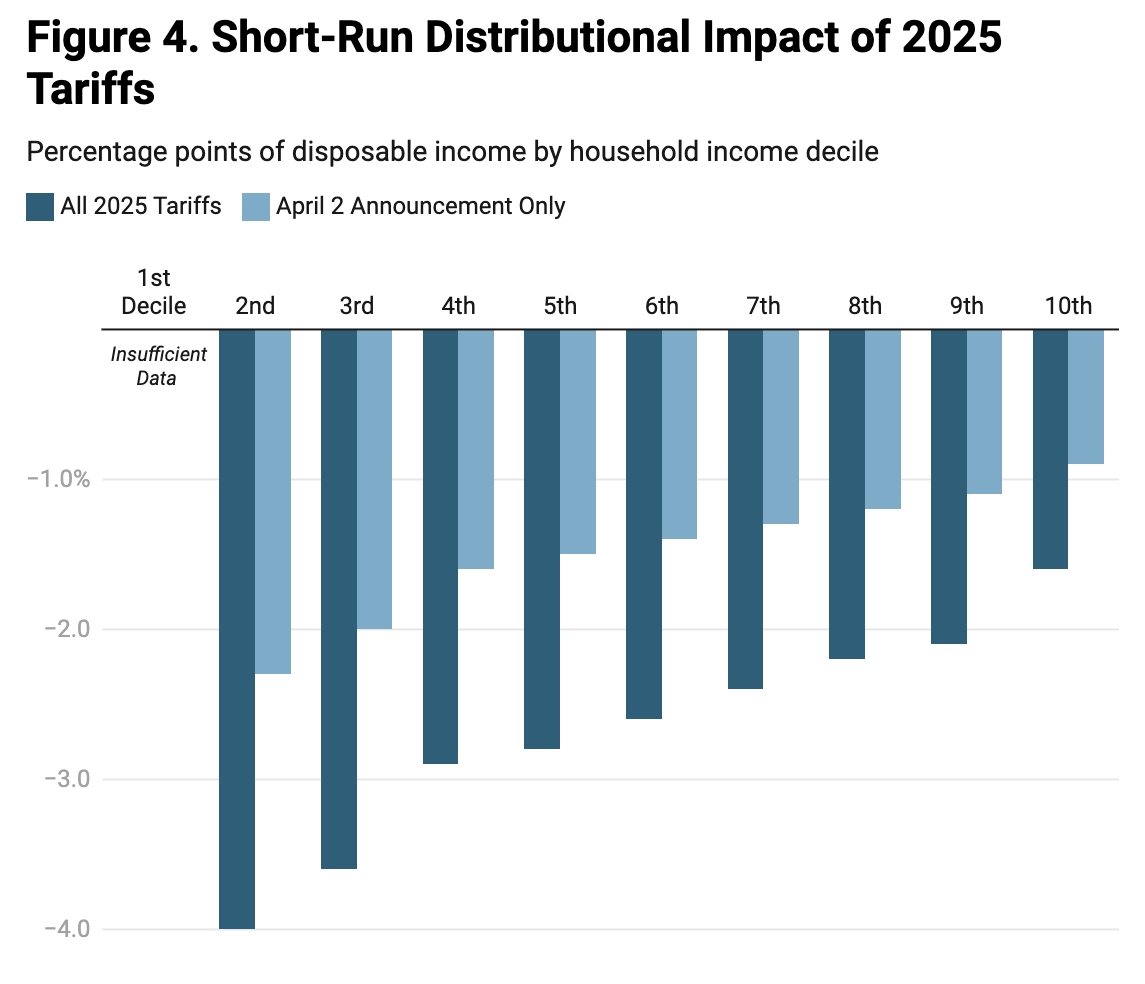
While the administration points to a fourth option of companies reshoring supply chains to bring middle-wage manufacturing jobs back to the US, Section 232 tariffs raise the cost of imported inputs, offsetting potential job gains with job losses in downstream industries like automotives and construction where there are 80 jobs for every job in steel mills and 177 jobs for every job in aluminum production. The Tax Foundation predicts a loss of 154,000 jobs in 2026 as a direct consequence of tariffs. This phenomenon can be witnessed in the Charlotte-Concord-Gastonia Metropolitan Statistical Area, where Parkdale Mills, a historic textile manufacturer in Gastonia, recently shuttered its Walnut Cove factory and laid off 72 workers due to rising costs.
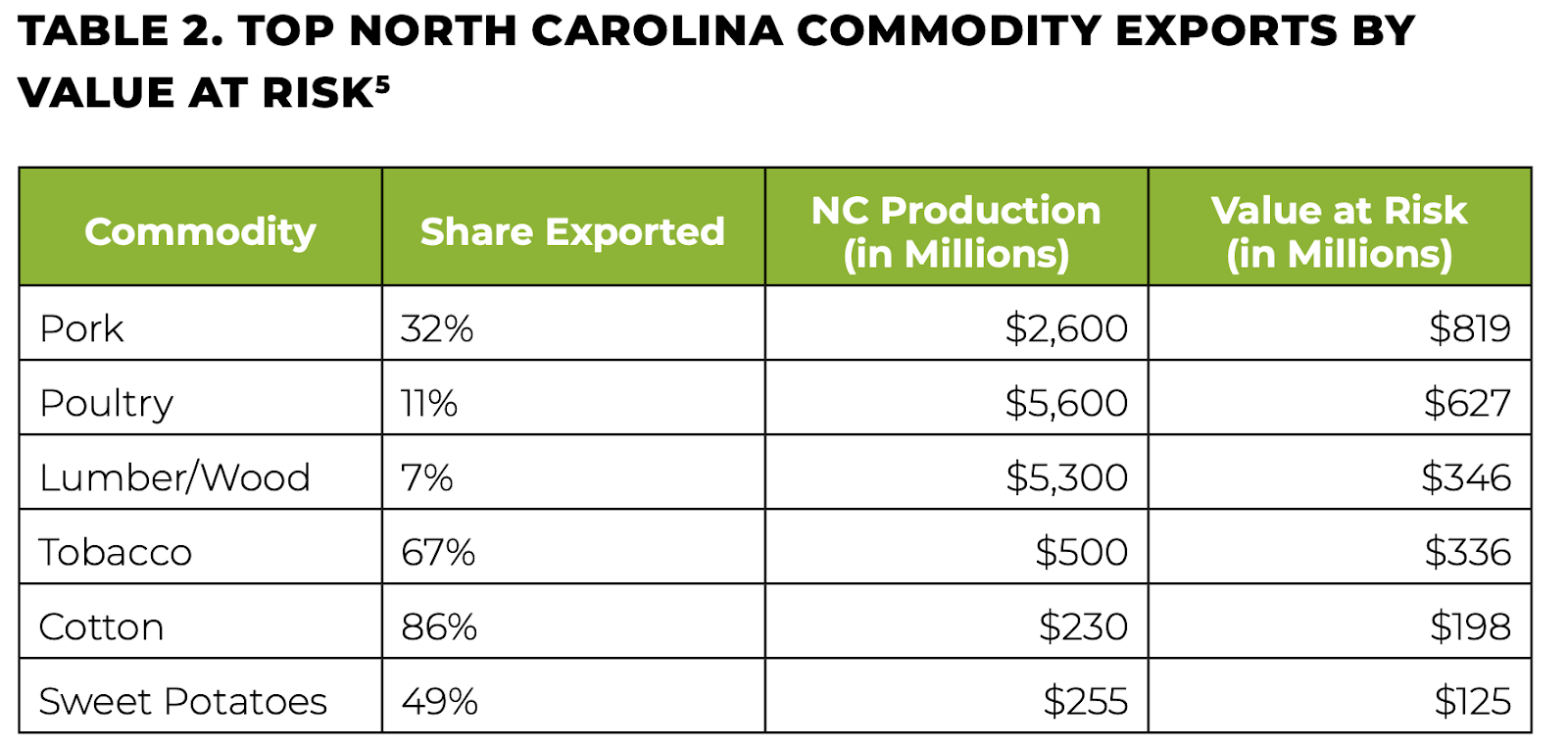
Tariffs imposed on exports from other countries do not exist in isolation; US trading partners such as China, Mexico, Canada, and the European Union have responded with retaliatory tariffs, causing American firms to lose access to critical export markets. According to the John Locke Foundation, North Carolina’s agricultural industry is projected to lose $695 million in net farm income and incur a total economic loss of $1.9 billion, over 2% of the state’s GDP. After factoring in ripple effects from lost revenue, North Carolina stands to lose 8,000 jobs, concentrated in rural communities.
Even without accounting for job losses from higher input costs and retaliatory measures, steel consumers paid $650,000 per job created in the steel industry through tariffs in 2018. Meanwhile, other job creation programs such as infrastructure investment are much more cost-effective, creating 18,000 jobs per $1 billion in spending, or approximately $55,600 per job.
In response to the Supreme Court ruling, President Trump imposed a 15% global surcharge under Section 122 of the Trade Act of 1974. However, Section 122 tariffs have a statutory limit of 150 days, after which Congress must vote to extend them. This grants Senate Democrats the opportunity to use the filibuster to allow the 15% tariff to expire on July 24, 2026. Even then, the surcharge is vulnerable to lawsuits since Section 122 can only be invoked to address “large and serious balance-of-payments deficits,” which the current “system of floating exchange rates completely eliminates” according to Nobel Prize-winning economist Milton Friedman.
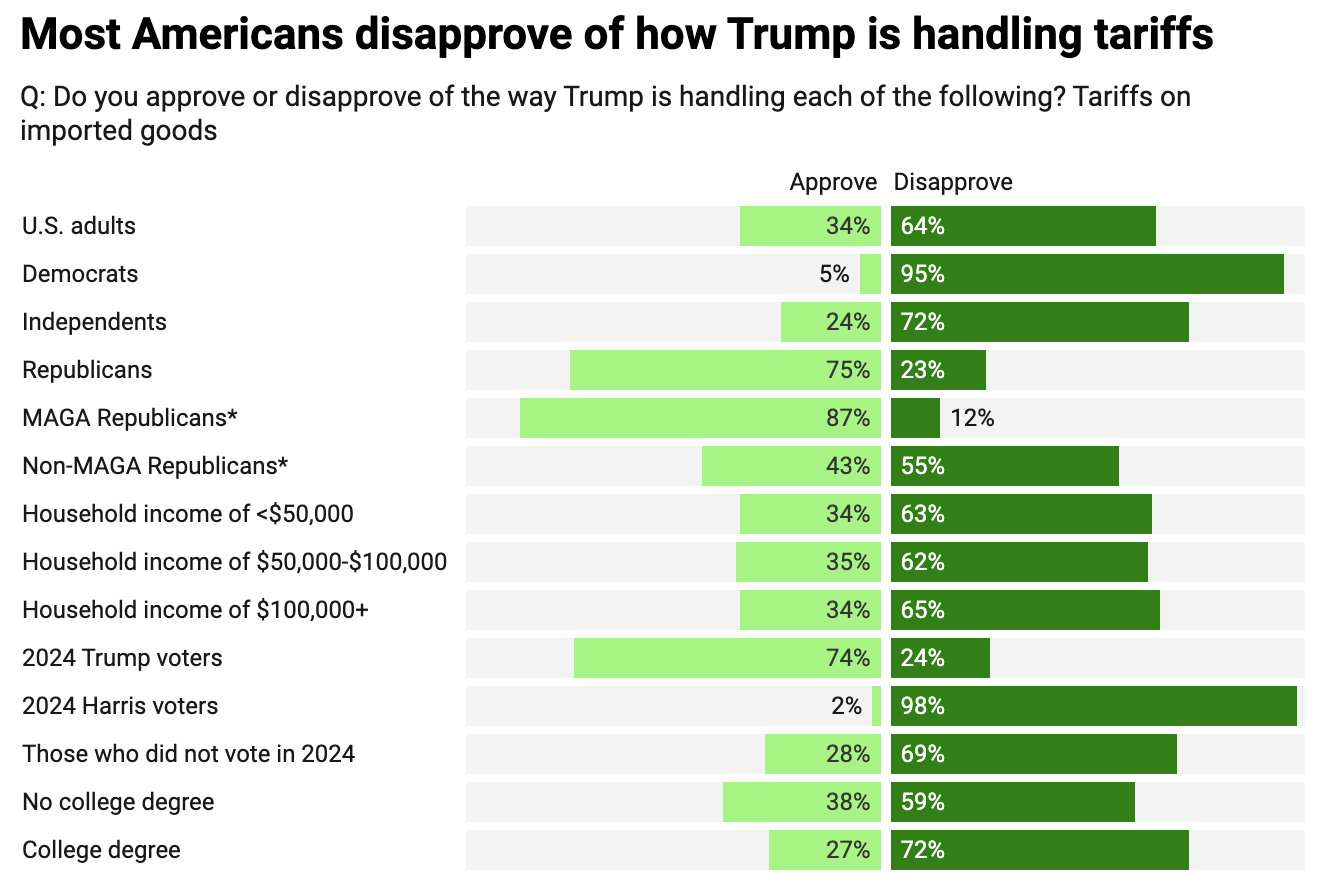
President Trump’s decision to continue to pursue sweeping tariffs comes as his trade agenda faces a crisis of legitimacy. A February 2026 ABC News/Washington Post/Ipsos poll reveals that 64% of American adults disapprove of the administration’s handling of tariffs, including a significant 72% of independents who view the policy as exacerbating the cost-of-living crisis the President promised to solve.
Trump’s tariffs have time and again proven themselves to be inefficient, inequitable, and utterly pointless for certain goods. As Pennsylvania Representative Madeleine Dean told Secretary of Commerce Howard Lutnick, “We cannot build bananas in America.”