

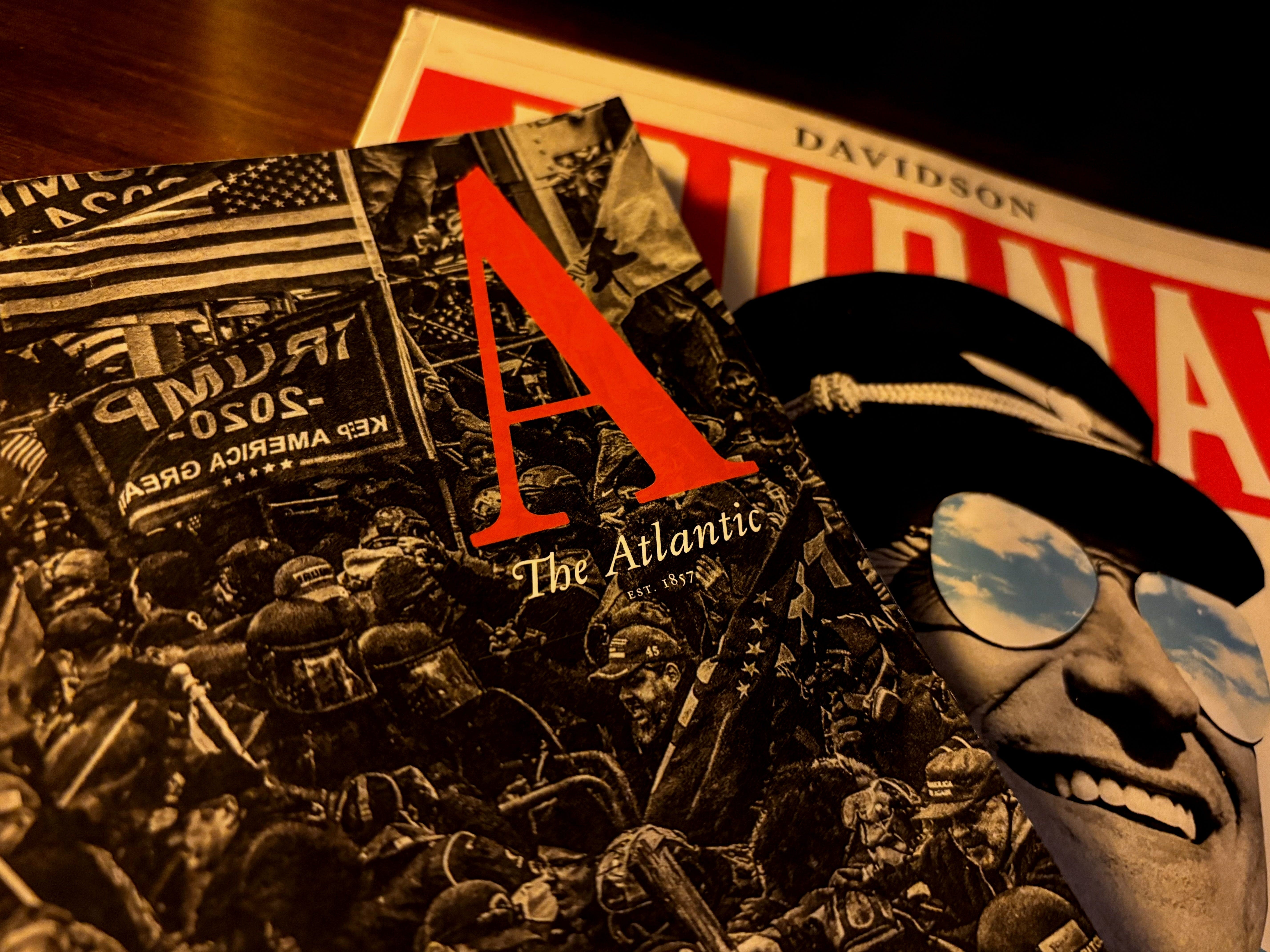
Yesterday, The Atlantic published an essay arguing that liberal arts colleges have been relatively resilient amid the recent turmoil in higher education. As universities confront the rise of generative AI and increased political pressure from the Trump administration, the essay contends that the liberal arts model may be better positioned to withstand these challenges than large research institutions.
The writer, Ian Bogost, a professor at Washington University in St. Louis, visited “four elite liberal arts colleges” during the fall admissions cycle, including Amherst, Vassar, Smith, and Davidson. Bogost joined prospective students on campus tours, sat in on classes, and talked with students, faculty, and administrators about the issues currently facing higher education. Writing from his position at a major research university, Bogost contrasted what he observed at these campuses with dynamics he said he rarely encounters at large universities.
Bogost’s primary observation is that small colleges have far less to lose from the administration’s threat to pull federal funds. While Davidson receives roughly $5 million in federal research grants, that figure pales in comparison to the hundreds of millions flowing into major research universities.
However, Bogost warns that this insulation is fragile. While Davidson’s low reliance on federal grants staves off immediate leverage, broader legislative threats are mounting—specifically the 2025 increase in the endowment tax from 1.4% to 8%. Although schools with fewer than 3,000 students are currently exempt from the increase, the shifting political climate suggests this carve-out may not last. As a leading liberal arts college in the South, Davidson remains a likely symbolic target for the administration’s “war on higher ed.”
Bogost specifically highlighted Davidson as a counterexample to conservatives’ claims that elite colleges function as political “echo chambers.” He saw the college as comparatively effective at navigating political polarization, noting that it physically sits on the county line between heavily Democratic Mecklenburg County and heavily Republican Iredell County. Bogost suggested that this geographic divide is reflected in campus life, pointing to Davidson’s creation of the Deliberative Citizenship Initiative in 2019 as an effort to encourage structured dialogue across political differences.
Bogost also suggested that Davidson may be better positioned than many larger universities to confront challenges posed by generative AI. He pointed to the college’s honor code and small class sizes, which he said encourage students to internalize expectations around academic integrity and discuss appropriate AI use with peers, rather than rely solely on enforcement by professors. Bogost argued that the resulting uncertainty and debate around AI use reflect a level of student investment that is often absent at larger institutions. He described this struggle to understand the technology as a necessary precursor to developing more effective AI policy.
The Lux reached out to President Douglas Hicks for comment on Davidson’s inclusion in the piece.
“I’m delighted that The Atlantic highlighted the work we do here at Davidson to prepare our students for lives of leadership and service and to foster a culture of mutual respect. The article emphasized that Davidson and the other colleges that were featured might be small but make a large and transformative impact in the world. I’m proud to be included in the story with our colleagues at Amherst, Smith, and Vassar.”