



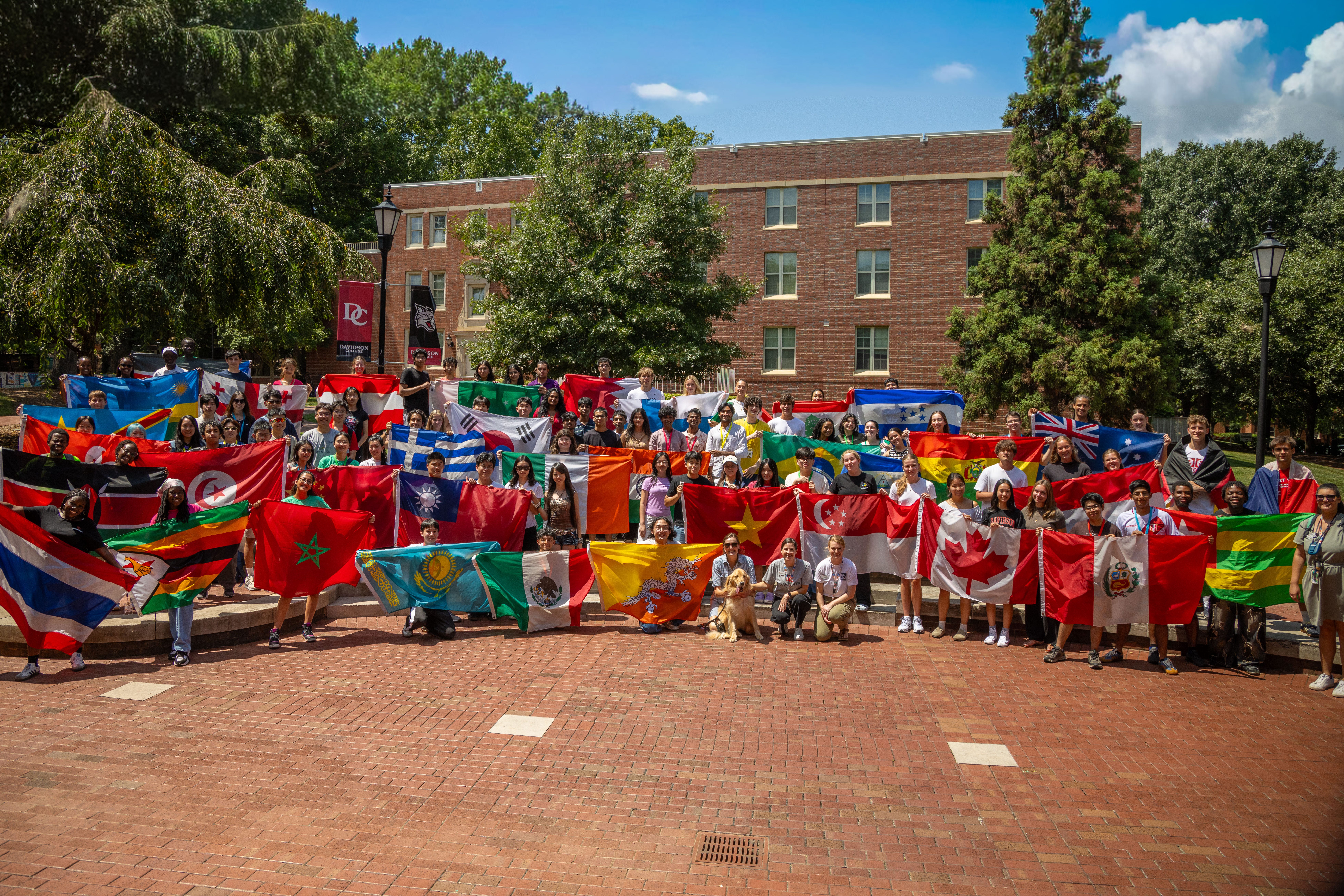
In case this is the first Davidson Lux article about CPT you have opened, let us start by explaining why all your international friends keep bringing it up. Curricular Practical Training (CPT) is what allows international students to pursue professional experiences relevant to their major while studying at Davidson or any other U.S. college. Optional Practical Training (OPT) lets international students work in the U.S. after graduation for 12 months, or up to 36 months for STEM majors. Understanding these terms is essential, both to follow this article and for your own academic, economic, and professional future as a domestic student.
Since January 2025, international students have faced a steady run of proposals that threaten the futures they have imagined for themselves, futures that their parents have invested in and their siblings have probably cursed them for. These proposals range from changes to CPT and OPT, to the length of time students can study in the U.S., to whether they can change their majors or transfer schools. Three policies stand out, one of which a federal judge in the U.S. District Court for the District of Massachusetts recently blocked:
CPT Suspension: On August 12, the Student and Exchange Visitor Program (SEVP) issued updated guidance on CPT. This guidance underlined that a college could only grant CPT if “the experience is a mandatory requirement for all students pursuing that degree.”[1] To protect the legal status of current Davidson international students, the college suspended CPT authorizations for the foreseeable future.[2]
Duration of Status: Although this rule has been put on hold by the courts, it has not been eliminated. “Additional litigation or an appeal” could still decide the rule’s fate.[3] It outlines several restrictions on academic and professional mobility, including extended paperwork for many OPT applicants, limits on an incoming student’s ability to transfer schools or majors, and obstacles for students who need longer than their program’s stated length to finish their degree.
OPT Restrictions: There have been discussions of regulations that could “restrict or terminate” OPT.[4] A Wall Street Journal article in late July reported that the “administration is considering” adding a $100,000 fee to OPT authorizations, which would increase the cost of working in the United States for international students.[5] The fee proposal cleared White House regulatory review September 11, 2026.[6]
Regardless of whether these rules continue to stand, their potential to deprive students of what they have built, and to render useless the hundreds of applications and the hours spent networking and hunting for an empty room in Union or Wall (a true story), weighs heavily on people who have trusted Davidson with their academic and professional careers.
So, why should you care?
Impact on Higher-Ed Affordability
International students who seek employment in the United States make up a significant portion of those approved for temporary work visas (H-1B). About 40% of initial temporary worker approvals each year go to people formerly on student visas.[7] Since student visas are a stepping stone to the U.S. labor market, a college’s ability to support its students’ professional futures is a major factor in whether a student enrolls. Potential policy changes and additional costs, such as the $100,000 OPT fee, affect whether students choose to study in the U.S. at all.[8] Even discussion of these changes creates uncertainty that risks “fewer international students coming to the U.S.”[9]
Why does that matter for domestic students? Beyond the many ways in which international students enrich campus intellectual life, and the fact that Davidson has professors from around the world who were once international students themselves, international students also affect the cost of your education. According to Brookings, international students subsidize American students because they pay higher tuition and receive less financial aid, a dynamic Brookings says is true “particularly at public universities.”[10] If fewer international students enroll, the result could be “higher tuition prices and economic struggles at colleges and universities across the country.”[11]
Impact on Professional Futures
Among U.S. workers in STEM, more OPT approvals are linked with lower unemployment. Although this correlation does not necessarily imply causation, employers, particularly in STEM, look to international student workers to fill specialized roles when U.S. applicants are scarce.[12] This in turn helps companies expand and create space for more workers. According to a National Foundation for American Policy analysis of Bureau of Labor Statistics data, there were 122,000 fewer foreign-born workers in the United States in January 2026 than in January 2025, accompanied by a 0.4 percentage-point increase in the unemployment rate for U.S.-born workers.[13]
Foreign workers spend money on housing, food, and services that sustain jobs in local economies. Over time, cutting back OPT could therefore cost jobs. International students at Davidson also build international connections, exposing domestic students to opportunities, housing, and perspectives that would otherwise be inaccessible.
Impact on Economic Environment and Community
OPT assists with roughly “$60 billion in annual economic output” in the United States.[14] Restrictions on OPT would undermine innovation and the pipeline of skilled workers, particularly in states like Ohio where international students contribute heavily to research universities and healthcare systems.[15]
In an economic analysis published in the Journal of Economic Perspectives, John Bound, Breno Braga, Gaurav Khanna, and Sarah Turner found that by 2019, higher education had grown into a significant export industry for the U.S.[16] The money that foreign students spend on their education in the U.S. is classified as an educational export, and it helps narrow the trade deficit. In 2023-24, international students added close to $43.8 billion to the U.S. economy and supported more than 378,800 jobs.[17]
The loss in international student attendance not only has a direct impact on the economy but also affects the pipeline that brings skilled talent from across the world to the United States.[18] Disrupting this pipeline means “American universities lose students, employers lose workers, and the country risks ceding innovation and investment to global competitors.”[19]
Even within North Carolina, according to the Kenan Institute for Private Enterprise, a decrease in net migration is affecting labor-intensive sectors such as “construction, hospitality, manufacturing, and elder care.”[20] The impact would likely be felt by businesses and consumers in the form of a restricted labor market and increased costs.
Beyond their contributions to on-campus jobs and research, international students at Davidson contribute to local community and nonprofit organizations in the Town and the greater Charlotte area, whether through the Bonner Scholarship Program, Alternative Breaks, Eating Houses, or the many other service-oriented clubs on campus. Davidson alumni who were once international students participate in the host family program, giving back to the community that once helped them thrive.
So What is being done and what can you do?
At Davidson, campus organizations, especially the Davidson International Association, have helped keep this issue on everybody’s radar. The college administration is engaging students, faculty, and staff in conversations about what potential solutions could look like moving forward. According to DIA Collab Chair and SGA Housing Committee Chair Samiksha Pyndi ‘29, the Student Government Association has also been meeting with administrators to find ways to support students and propose a resolution.
Despite the efforts already in motion, holding your campus leaders, political representatives, and fellow students accountable is still essential to the success of the measures being discussed. Here are three tasks for you:
Efficient introduction and implementation of solutions will require consistent campus-wide conversations. Awareness is the first step to being part of the discourse. So keep yourself informed.
This issue is immediate. International students are weighing the costs and benefits of applying to and attending colleges like Davidson in the wake of these policies. Students are losing time and opportunities as policy gets confirmed. Especially as the midterms approach, stay involved with how your senators and congressional district representatives support or oppose these policies. Vote. Send comments and messages opposing restrictive rules.
Encourage the College’s administrators and staff to share communications about international students with the wider campus. Making announcements about policy changes public will provide another layer of awareness and establish the importance of the issue for more than just international students.
Through this article, we do not mean to suggest that the value of an international student should be measured by what you gain from their presence. Regardless of what an international student contributes, every student deserves the opportunity to pursue their aspirations. That is how an international student should be seen: through the lens of their passion, ambition, and dedication. However, as is often true in life, we tend to care less about what we do not think concerns us immediately, which is why it matters for everyone’s future that you understand how this affects you.
Notes
ISE
https://www.business-standard.com/immigration/us-tightens-checks-on-foreign-student-jobs-warns-colleges-of-action-126082800911_1.html
https://day1cpt.org/news/court-blocks-d/s-final-rule-just-before-september-15
https://www.lawfirm4immigrants.com/trump-opt-elimination-threatens-international-students/
Exclusive | U.S. Weighs $100,000 Fee for Foreign Students Wanting to Work After Graduation - WSJ
White House Clears Fee Proposal for Foreign Grad Work Program
https://www.brookings.edu/articles/how-the-trump-administration-is-eroding-the-immigrant-talent-pipeline/
https://economictimes.indiatimes.com/nri/study/us-opt-programme-explained-how-trumps-100000-fee-could-hit-international-students/articleshow/132756005.cms
https://www.lawfirm4immigrants.com/trump-opt-elimination-threatens-international-students/
https://www.brookings.edu/articles/how-the-trump-administration-is-eroding-the-immigrant-talent-pipeline/
https://www.americanimmigrationcouncil.org/blog/biggest-changes-student-visas-in-generations-what-you-need-to-know/
International-Students-STEM-OPT-And-The-US-STEM-Workforce.NFAP-Policy-Brief.March-2019.pdf
National-Foundation-for-American-Policy-Labor-Force-Analysis.February-2026-1.pdf
https://www.lawfirm4immigrants.com/trump-opt-elimination-threatens-international-students/
https://www.lawfirm4immigrants.com/trump-opt-elimination-threatens-international-students/
Bound, J., Braga, B., Khanna, G., & Turner, S. (2021). The globalization of postsecondary education: The role of international students in the U.S. higher education system. Journal of Economic Perspectives, 35(1), 163–184.
https://www.migrationpolicy.org/journal/spotlight/international-students-united-states
https://www.brookings.edu/articles/how-the-trump-administration-is-eroding-the-immigrant-talent-pipeline/
Ibid.
https://commongoodnews.org/economy/immigrant-labor-shortage-hits-north-carolinas-urban-economy-hard/